Influencer marketing in India has moved well beyond one-off shoutouts. Brands now plan creator campaigns the way they plan any other channel, and creators run their work like small businesses. This guide covers the shifts that matter for brands and creators, and what to do about each one.
1. Short-form video leads discovery
Most people first meet a new brand or creator through a short video, usually on Instagram Reels or YouTube Shorts. For brands, that means a campaign brief should specify the video format and the first few seconds, not only the product message. For creators, it means the hook is the work: if viewers leave in the first two seconds, nothing else in the video matters.
2. Smaller creators carry more trust
Nano and micro creators often have smaller audiences but closer relationships with them. Followers ask questions in the comments, and the creator answers. A brand that works with ten niche creators can reach several distinct communities, each with its own context, instead of one broad audience that only half-cares.
- Brands: look at comment quality and audience fit before follower count.
- Creators: a tight niche is an asset. Say clearly who your audience is and what they buy.
3. Regional language and niche communities
India does not have one audience, it has many. Creators who speak to a language community or a specific interest, such as budget travel, skincare for Indian skin tones or regional food, often outperform generic content for the brands that match. When you brief a creator, ask what language and tone their audience expects, and let them write in it.
4. From one-off posts to ongoing partnerships
A single post introduces a product. A series of posts over weeks lets the audience see it used, hear the creator's honest view and come back to it. Brands benefit from consistency and creators benefit from predictable work. If a first campaign goes well, agree on a second before the first one ends. Our guide on building long-term brand and creator partnerships explains how.
5. Measurement beyond likes
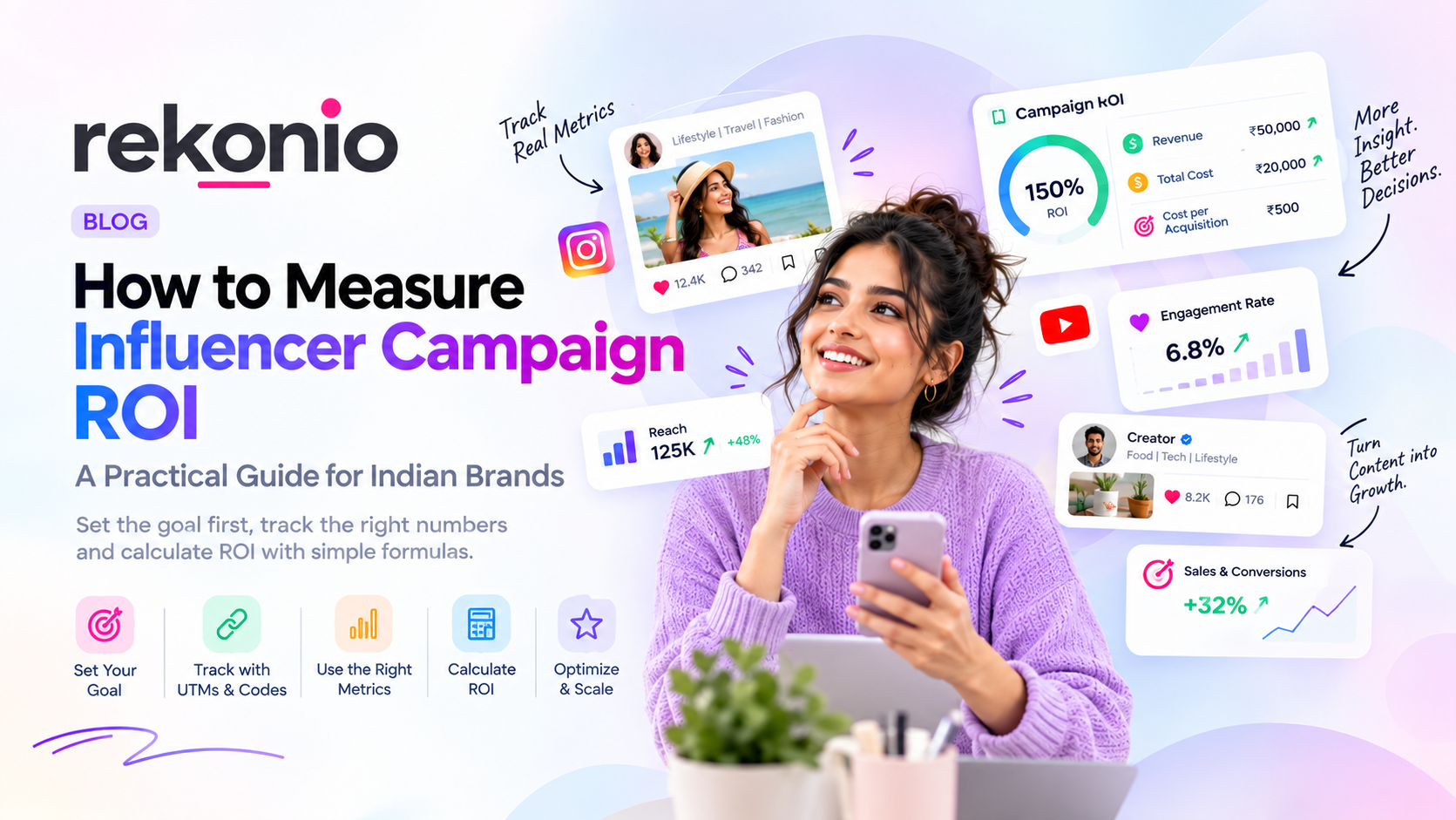
Likes show that people noticed a post. They do not show that anyone acted on it. More brands now track saves, shares, link clicks, discount code use and sales that follow a campaign. Decide your success metrics before the campaign starts and write them into the brief. We cover the practical side in how to measure influencer campaign ROI.
6. Payment safety and clear terms
Many creator deals still run on chat messages and trust. Terms get misread, and payments arrive late or not at all. Milestone-based payments solve the core problem: the brand funds the deal before work starts, and each payout is released only when the deliverables are approved. On Rekonio, brands fund each deal through Razorpay, creators deliver in the deal thread, and a dispute pauses the release until it is resolved. A 10% platform fee applies on completed deals. You can read the details in the FAQ.
What to do next
If you are a brand
- Write a one-page brief with the goal, deliverables, deadline and how you will measure success.
- Start with a small group of niche creators and test what works before scaling up.
- Pay through a method that holds funds until you approve the work.
If you are a creator
- Know your audience well enough to describe it in two sentences.
- Agree deliverables, timelines and revision limits in writing before you start.
- Work with brands that fund the deal up front.
A simple planning timeline
- Week 1: set one goal, one budget and a shortlist of creators who fit your audience.
- Week 2: send the brief, agree deliverables and fund the deal.
- Weeks 3 to 4: creators draft, you review within the agreed revision rounds, and posts go live.
- Weeks 5 to 6: collect results, compare creators and decide who to work with again.